On the fringes of the Sahara in Southern Morocco a seasonal phenomenon occurs in wetter years. Rain collects in a shallow, temporary salt lake, offering a feeding and resting site for thousands of migratory birds on their arduous journeys from Africa to Northern lands. This ephemeral lagoon was our camp for the night.
By first light the Ornithological Orchestra is tuning up for its performance. As a lone audience member I took my seat at the waters edge, a crunchy white layer of salt giving way underfoot to a spongy, sticky brown mud underneath. First to sound are the numerous pairs of Ruddy Shelducks, a brash repertoire of high-pitched barking and donkey-like honking as they glide across the surface. Rusty, auburn plumage reveals a shiny green flash of feathers; a flapping fanfare as they fly past, trumpeting out of tune. A Black-Winged Stilt squeaks shrilly as it wades elegantly past. Its bright red legs, glistening wet in the sun, seem to bend backwards as it strides like the most precise, poised ballerina through the shallows. Its perfect reflection in the still, mirror-like water reaches up to merge with its probing, narrow, jet-black beak as it delves for food in the muddy margins. Floppy red feet are revealed during its exaggerated steps and a white-feathered rear flashes as it dives its head.
The rising sun turns the distant arid mountains a rusty red in the dawn light, while behind the towering, undulating dunes of Erg Chebbi loom surreally out of the horizon. Shrieking, squealing calls of approaching flocks of Terns, swooping acrobatically across the waters surface. Graceful, speckled Sandpipers bob across sandbanks, whistling rhythmically while Coots cruise past, heads nodding to the beat. Tiny Kentish Plovers tiptoe unassumingly through the grassy fringes, whistling hurried, nervous ‘pip-pips’ in a hushed percussion. 
The highlight of the symphony comes from the harmonious assemblage of Flamingos, their startling white and rose-coloured plumage a vivid contrast to the black, basalt hamada hills beyond. Their pink, u-bend necks plunge beaks methodically into the brackish water, a melodic murmuring as they extend their wide crimson wingspans in full.

As the sun rises high, glaring dazzlingly on the lake surface, the intensifying heat transforms the distant bank to a distorted, watery heat haze. The avian concerto settles into a calmer harmony. This has been a truly unique spectacle; migratory musicians en-mass. Bird song in stereo surround sound. 


Emma
 
 
In 1956 the French left Morocco after 44-years of occupation but recent times have seen a new invasion; from the Southern Spanish Ports they come in their thousands, a campervan cavalcade marching to a victory of sunshine and low-cost campsites.

Throughout natural history, species with the means (ie-wings) have wisely selected to spend their winter months in the sunshine of North Africa, returning to the lush landscapes of Europe during the warmer summer months. This mass-migration of sleek, shiny-white motorhomes starts around December; armies of retired French couples cross the straits of Gibraltar and spread strategically across Moroccan camping grounds.

Rigorous behavioural routines can be observed; departure to the next site is at 8.30am sharp, with arrival around midday for lunch. Males typically drive, with females directing the fibreglass monsters into position through a series of bizarre hand signals. Yellow plastic wheel wedges level the automobile to perfection, the satellite dish rotates into position, astroturf is rolled outside the doorway, a miniature dog appears on its lead (or even cats) and a pot plant completes the picnic table and two chairs.
Territorial behaviour is intense, parking is unidirectional with an unwritten rule of personal space encroachment; an awning overstretching into a neighbours pitch will be met with fierce aggression. On one occasion we witnessed a ferocious altercation culminating in a couple spraying a hose over a man and his wife that refused to move their car from slightly blocking the communal tap. Morning sees a parade of males carrying ‘Vide cassettes’ from their on-board toilettes, followed by a mass-grooming of vehicles; vertical mopping maintains the pristine gleam while females polish the windows and hoover the 3.1m2 of interior carpet.

But surely this kind of mass tourism is great for the struggling Moroccan economy? Not so much when these vehicles represent Carrefour-on-wheels; stocked to the roof with Cotes-du-Rhone and Camembert they remove the need to shop or eat at restaurants locally and hotels, buses and taxis are unnecessary when you travel in your accommodation. Behind high campsite fences on the fringes of towns, there is little integration with local communities or absorption of culture; essentially these mobile home ‘cocoons’ are miniature replicas of their French apartment equivalent (only with winter sunshine). French is Morocco’s widely-spoken second language so communication is effortless and at around 5 Euros per night, pitch fees are a fraction of European sites. Some campervans will move around the country but many take root in a single location for the entire duration of their 3 month visa. On the outskirts of Taghazout a miniature city has grown on a stretch of coastal wasteland; hundreds of campervans congregate in groups, encircling areas where Petanque is played and Christmas trees and lights dot the rough ground in December.    
On the flip side of the dirham is the possibility that maybe a season in North Africa is an avoidance of ridiculously high French winter fuel bills. Retired couples removed from the social circles that employment brings are possibly seeking new communal interactions. For overlanders, this influx of motorhome tourism has provided an infrastructure of convenient campsites throughout the country, yet the immaculate, meandering, camping car convoy can be escaped in minutes via any road with a slightly rough surface.

In a country that once saw transportation and movement over its deserts and mountains via a Camel Train, there now comes the Campervan Train. 


Emma
 
 
Picture
Way back in 1962, British director David Lean choose the dusty town of Ouarzazate and its surrounding area to film his epic movie ‘Lawrence of Arabia’. Lean recognised the potential of the area as a unique and versatile film location and inadvertently started the small dusty towns long love affair with Hollywood.

Ouarzazate and the smaller UNESCO World Heritage site of Ait Bennadau, just 30km up the road, are the ‘go to’ locations for directors who need an authentic looking Roman or Biblical town, a set for a Gulf War epic or even a barren sci-fi landscape.    
It wasn’t until 1983, when Moroccan entrepreneur Mohamed Belghmi recognised the need for a permanent studio to be built. The Atlas Studio opened its doors on the outskirts of Ouarzazate, it is the largest studio in the world in terms of acreage.

Alexander the Great, Babel, The Way Back, The Passion, The Mummy, The Living Daylights, Kundun, Asterix and Obelix Meet Cleopatra, The Jewel in the Nile, The Hills Have Eyes II, Sex and the City II, Time Bandits, Prince of Persia, Jesus of Nazareth, and a host of Ridley Scott films including Black Hawk Down, Gladiator, Kingdom of Heaven and Body of Lies have all been filmed in the area.
Picture
Unfortunately the onslaught of CGI has left the movie industry in Ouarzazate reeling a little. The studios, despite being neglected by Hollywood, are still a popular tourist destination, in part because the 322,000 square feet of desert they occupy are littered with decaying movie sets. On the day we visited we pretty much had the place to ourselves.
The last major movie to be filmed at the Atlas Film Studio was 2005’s Kingdom of Heaven, now the gargantuan scaffold, plywood, fibreglass and plaster set is weathering slowly in the middle of a great expanse of desert. The epic Egyption set from Asterix and Obelix Meet Cleopatra isn't holding out much better either!

For now the studio waits patiently for the next location scout to arrive whilst hoards of tourists bumble around a health and safety inspectors nightmare. 
Picture
Sadly celebrity spotting in Ouarzazate is likely to be a thing of the past, like a VHS tape or ice cream intervals at the cinema!


Andy
 

Piste Off

29/04/2013

1 Comment

 
Driving in Morocco is hazardous in many ways and off-road driving on the ‘piste’ even more so as we discovered when we hit a large field of Fesh-Fesh!

“Fesh-Fesh, what is Fesh-Fesh?” I hear you cry.

Fesh-Fesh, as the Arabians call it, is the by-product of thousands of years of erosion; sand that has been worn down from it’s granular size into a fine dust, not too dissimilar to talcum powder.

What makes Fesh-Fesh so dangerous is that you don’t see it coming until you are in the thick of it as we discovered whilst driving a 90 mile off-road route from Tafraout to Taouz along the Moroccan/Algeria border in the South-East.

When encountered it can spell instant disaster, as its smoke-like plumes can quickly obscure vision and it’s quicksand like qualities can leave you with a sinking feeling. Tread too deeply or too slowly and expect the Fesh-Fesh to envelope your vehicle. Luckily for us we had aired the tyres down on the friendlier, slightly forgiving, soft yellow sand prior to hitting the Fesh-Fesh field.

In a slight panic and with Emma crying “whatever you do, don’t stop” in my ear I nailed the accelerator and was thankful Bee-bee’s gas guzzling 3L turbo engine had the horsepower to get us through it. A quick glance in the wing mirror revealed the volcano-esq clouds slowly engulfing Bee-bee as the power and traction got sucked from the vehicle. Wrestling with the steering wheel I attempted to aim the car at the surest tracks ahead and by some miracle after about 500m managed to find some firmer ground.

Once airborne, this billowing dust can linger, creating havoc for anyone following in your tyre tracks. Due to its powdery qualities the Fesh-Fesh adheres to anything it can settle on, and it wasn’t until the following day at our campsite that the Fesh-Fesh really started to cause me some real problems.

Whilst doing my daily undercar crawl I inhaled a face full of Fesh-Fesh that had gathered in the chassis rails, my nose started streaming instantly and a bout of sneezing begun that has lasted 8 days and counting. A full-on dry cough developed and a quick email to Doctor Lois, our resident expedition doctor, revealed the rather over-priced cough sweets I had purchased weren’t going to do much.

Inflammation of the airways or ‘Sahara Lung’ as we called it was the diagnosis and not much can help except a Ventoline inhaler and time. After a week of sleepless coughy nights I still have a croaky voice and the slightest of dust sets of a sneezing fit that has slowly been depleting our supplies of Anti-Histamines!

Despite feeling rather poorly and sorry for myself I would still rather drive that track on a daily basis than commute to work everyday!


Andy
 
 
Glance at a map of Morocco and your eyes are drawn from the mountains, deserts and cities of the north to a stretch of land in the southwest; few roads and habitations and tentatively separated from the rest of Morocco with a faint dotted line. This is Western Sahara.

Few tourists venture this far south, whispers amongst the campervan masses were that it’s “all the same” and “there’s nothing there”. But there is beauty in bleak and barren; 360° of arresting, monotonous landscape stretching as far as the eye can see in every direction. Standing surrounded by such a huge expanse of ‘nothingness’ creates a humbling feeling of being such a small dot on a huge planet. In a place where camels outnumber cars you feel as if you have the whole vastness to yourself.

Historically, this area of the coastal Sahara was controlled by the Spanish but by the late sixties pressure from the native Saharans, the Saharawi tribes, had increased. In 1973 a campaign for independence was initiated by a newly-formed militant group ‘Polisario’. Spain reluctantly pulled out of Western Sahara in 1976, facilitating a division of the territory between Morocco in the North and Mauritania in the South. Polisario fought on, thousands of Saharawi’s fled to neighbouring Algeria and eventually Mauritania withdrew and the Moroccans occupied 80% of the area, forcing Polisario to retreat to marginal areas in the East.

Polisario directed a guerrilla war against Moroccan forces until 1991 when the UN negotiated a ceasefire with the aim of allowing Saharawis the choice between independence or Moroccan rule. This referendum never happened due to voting eligibility problems, Morocco dug it’s heels in deep and refused to compromise; subsequent talks of a referendum have failed with increasing concern over human right’s issues in the territory. Approximately half of the Saharawis still live in refugee camps just across the border in Algeria.
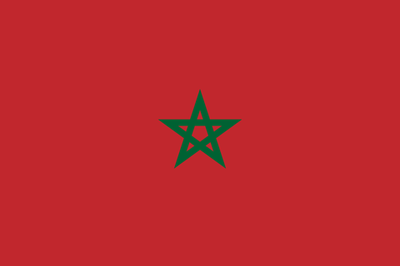
We visited the capital Laayoune, coastal towns of Boujdour and Tarfaya, venturing as far south as Dahkla then inland to the dusty desert town of Smara. Morocco has encouraged migration of people from the North to these areas through tax-free incentives and a lowering of the cost of fuel by around 30%. The huge amounts of money desperately pumped into the region by Morocco is evident; unnecessarily grand entrances to towns with several lanes of new tarmac, ornate street lights and ostentatious gateways displaying giant painted Ostriches, Camels and Gazelle. Urban infrastructure has been rapidly constructed, suburban road systems, electricity and water but no houses and empty streets. The red Moroccan flag with its central green star flies defiantly over every official building.

Information from the region is fiercely controlled by Morocco; we were frequently stopped at police checkpoints and questioned about our occupations (journalists are not allowed in the region), where we had come from and were going; they closely monitor the whereabouts of all tourists. The UN and the military had a strong presence wherever we travelled.
Despite international pressure, the future for the Saharawi people looks unpromising; the question as to why the situation continues could be answered by the rich natural resources under the surface of both the land and sea. Offshore coastal waters team with abundant fisheries; the area is one of the worlds largest producers of Sardines and fleets of hundreds of fishing boats tirelessly unload tonnes of fish from Saharan ports every day. The land is phosphate rich (75% of the worlds phosphate reserves are in Morocco and Western Sahara); we saw huge conveyor belts transporting phosphates from desert mines to waiting ships. Despite no legal claim to the territory, in 2001, Morocco gave coastal oil exploration rights to France and the US.

Western Sahara glaringly lacked one thing; its people. We found no evidence of their culture or heritage; no Saharawi restaurants or craft shops, no local music playing, native dress or traditions. A land in limbo, polluted by indiscriminate landmines and devoid of its people; a country whose future is currently as bleak as it’s landscape. 


Emma
 
 
Picture
Morocco, a short hop from Spain and not requiring a Carnet, has long been a favoured overlanding destination for many Europeans. During our time here we have spotted overland vehicles from Holland, Germany, Czech Republic, Poland, Italy, England and of course it is incredibly popular with the French, whose native language (along with Arabic) is spoken throughout. The 3-month visa, year round sun (at least in the south), varied landscape and friendly people also help seal the deal.
Picture
Our first real taste of off-road driving came as we decided to pass the High Atlas mountains for a third time. After crossing twice on two stunning paved roads we decided to opt for a more challenging route on our third pass. Heading north from the small town of Timesgadiouine we had planned on doing a 1 day north-easterly circuit passing over the 3205m tall Djebal Tabgourt. With our 1:1,000,000 Reise Know-How map in hand we set off, after about an hours drive it became blatantly apparent that all our map was good for was toilet paper if we got caught short. Relying on our GPS compass for direction we carried on regardless to try and navigate the barely wider than Bee-bee tracks. 
Picture
The route we took was scarcely driven, rocky and featured a few hair-raising cliff drops. After a full days drive it dawned on us that we were not going to get off the mountain before sunset. We drove until the light dropped and soon our situation became the start of one of those ‘When Things Go Bad’ TV programs as we found ourselves setting up camp on a precipitous edge in -2°C at the top of the windblown mountain. 

The next days driving was equally as challenging and featured several slightly daunting drop-offs. The descent was steep and involved rock crawling that was so heavy on the brakes they literally stopped working, requiring us to pause in a little village to let them cool down. After nearly two full days of driving we arrived in a small settlement where we had to pass between two buildings; thankfully the gap was about 20cm wider than Bee-bee. Travelling these tracks in anything bigger than us would have caused problems; on our entire route we rarely encountered places wide enough to pass on-coming vehicles, let alone turn around. Luckily we didn’t have to do either, emphasising just how little traffic passes along these routes.
Picture
Located on the coast just south of Sidi Ifni is Fort Bou Jerif, a clichéd French Legion fort, the kind you’d see in a Sunday afternoon movie. It is also right next to the site of a rather trendy boutique campsite of the same name. After a couple of nights of wild camping we owed it to each other to have a hot shower and so heading off-road we attempted to follow the rather useless signs (foolishly failing to make a note of the GPS co-ordinates that were written on the first sign).  After approximately 18km of piste and a few wrong turns we finally got our first view of the rather impressive fort. Driving closer we realised that the previous 3 days heavy rain had resulted in a flooded wadi flowing rapidly between us and a hot shower.

Whilst in Mongolia river crossings were part of the daily routine, but in Morocco we were not really expecting any, let alone one over 1m deep and flowing. Whilst wading in, thigh deep, to check the riverbed a French Landcruiser arrived behind us and watched on amused at my underwear paddling antics. After evaluating the situation we decided the crossing was do-able despite the French surrendering to overland defeat. With a little gas and a carefully planned route Bee-bee took the crossing in her stride as the water washed over her bonnet. We watched on, smugly, from the far riverbank as the French turned around and drove the 50km detour to the nearest bridge.
Picture
A trip to Morocco would not be complete without driving some stereotypical Saharan sand dunes. A real highlight for me was driving out to the 300m tall dunes at Chegaga. Other than a few sandy tracks (where we got stuck) and getting bogged down in soft sand on the shores of Lake Baikal we’d never really driven Bee-bee in the soft yellow stuff. Apprehensively we headed west out of the town of M’hamid; after about 3km the stony track gave way to undefined tracks in the sand. This time we wisely aired down the tyres to 14psi and cracked on; given our previous track record for driving in soft-sand we were amazed at the difference airing down made. Bee-bee, despite her hefty load, handled impeccably and we smoothly drove the 120km (with a camp in the middle) without a hitch.

After 2 months in Morocco it is obvious why we have met so many other overlanders. Morocco is essentially an off-road playground for Europeans and it is often used as a testing ground before embarking on longer trips or as a gateway to Africa. It offers all kinds of challenging terrain for every kind of overlander from Motorcyclists to the largest of off-road trucks. The people are friendly, the fuel is cheap and weather is excellent; it is essentially overland heaven and it’s only a short ferry trip away!


Andy


Across the valleys of South Western Morocco we camped amongst vast plains of dark, twisted, prickly trees extending from arid soil and bearing hard, oval, bright green fruit. These fruits contain a nut, at the centre of which is a small, hard kernel that produces a rich, nutty oil when crushed. Argan oil is one of the world’s rarest oils as a result of the small area in which the trees are found. Extraction of the oil is still carried out arduously by hand, traditionally the nuts were collected after being consumed by goats but the current method now avoids this processing step. The kernels are roasted if the oil is to be used in cooking, first producing a brown paste similar to peanut butter, then a finer oil which bread is dipped into. 


Over the last few years the use of Argan oil in the cosmetics industry has soared, hairdressers are swearing by this new ‘Moroccan oil’ and beauticians are raving about its skincare gains. Here in Morocco the benefits run further than skin deep; the production and sale of Argan is largely controlled by government-supported women’s cooperatives, now so successful that other areas of agriculture are looking to adopt the model. We visited one such cooperative in the Ourika Valley, where the women explained that many of the employees were either divorced or widowed, therefore giving them an opportunity to be self-sufficient and independent. Many women are able to afford to educate themselves and their children with the income resulting in a positive impact on the socio-economics of many rural communities. From an environmental perspective, the trees are now so valuable they are protected countrywide; consequently protecting the surrounding desert habitat and wildlife.

Emma
 
 
Leaving the pasta and noodles in Bee-bee, I was invited to join a Moroccan chef in his restaurant kitchen to learn how to prepare two classic Moroccan dishes; Tagine and Couscous. ‘Tagine’ is actually the name of the conical-shaped earthenware dish that the meal is served in, similar to a ‘Casserole’. The fish tagine is made with red mullet, potatoes and olives with a tomato based sauce prepared with cumin, parsley, paprika, garlic and pepper. The lamb tagine has a ‘sweet’ sauce created with ginger, cinnamon and saffron and presented with caramelised prunes topped with toasted sesame seeds. Nothing is measured exactly; olive oil is glugged and water splashed into the pan with rough handfuls and pinches of spices thrown in; the importance is to taste throughout the cooking and adjust the ingredients to your liking. There is no ‘leave to simmer for an hour’ while you put your feet up; constant stirring, adding water, tasting and seasoning is only interrupted by a quick mint tea break.


Forget your Ainsley Harriet ‘add boiling water and stand for 4 minutes couscous’; the authentic version takes around 2 and a half hours. The couscous is steamed slowly in the top part of a ‘Kaskas’ pan as the vegetables cook underneath. The traditional couscous which families share on Fridays contains 7 vegetables and is beautifully presented in a circular, symmetrical pattern on a    huge shared plate with chickpeas in tomato sauce sprinkled over and topped with a mouth-watering caramelised onion and sultana ‘T’fia’.

Drive through any village at meal times and Tagine stalls flank the street, the decorated terracotta pots lined up on charcoal grills along the counter. Those with a tomato placed on the top have been ‘reserved’ earlier in the day. Couscous is eaten in the tiniest hole-in-the-wall cafes to the swankiest 5 star restaurants across the whole of Morocco. A huge “Shukran” to executive chef Younes and his chef Sommaya from Hapimag Marrakech for their expertise and teaching in Moroccan cuisine. To have a go at Moroccan cooking we have attached some home made PDF recipes below. Bon Appetit! 

Emma

Lamb Tagine
Fish Tagine
Couscous Royale
 
 
If the lanes and alleys of the souk and Kasbah are the arteries of Marrakech, then Djemaa el Fna is its heart- a central square pulsating with life.

During the day it’s a comparatively sedate scene although still impossible to cross without being intercepted by trinket hawkers, water sellers, snake charmers and orange juice vendors. Horse-drawn carriages lug tourists around its periphery while those on foot vigilantly dodge having snakes around their necks or monkeys on their shoulders. Water peddlers dressed elaborately in coloured robes rotate tassels on their hats are more about a posed tourist opportunity than quenching your thirst. Squeaking, oboe-like instruments warn of a huddle of basket-covered snakes; wander too close or feign interest and a shiny black cobra will sway erect from under the basket next to a thick, coiled, motionless viper. Traditional herbalists sick cross-legged under the shade of parasols, attracting a gathering of curious onlookers and patients hopeful that the concoction of ground herbs and animal parts will cure their ailments.


By late afternoon the food stalls begin to set up; rows of temporary eateries consisting of central preparation and grilling area surrounded by a few tables and benches. Fiercely vying for business, menus are eagerly waved in your face accompanied to chants to remember their food stall “117, taste of heaven!” Smoke wafts from these makeshift restaurants that serve up Tagines, spicy sausages and grilled kebabs, cous cous, steamed snails, whole sheep’s head and brains, sweet chicken pastilla, salads and bowls of steaming Harira soup.

As the sun sets, storytellers and acrobats attract crowds encircling their animated performances. Impromptu music sessions start up with amateur musicians perched on wooden stools around lamps illuminating their faces nodding to the hypnotic drum-beat.

Emma